Book Talkin’

(You need to sing the title of this post to the tune of “Jive Talkin’”)

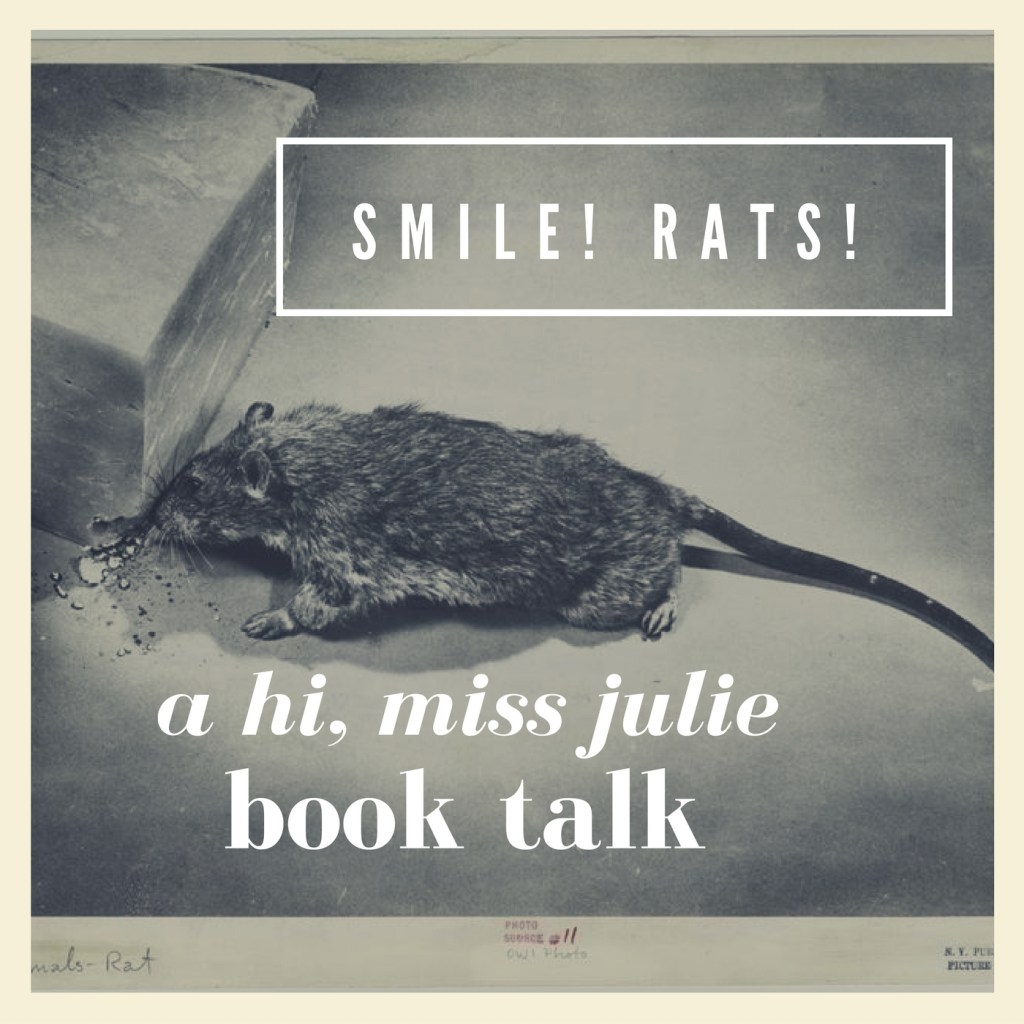
via the new york city public library's flickr page

via the new york city public library’s flickr page

As the school year draws rapidly to a close (seriously, where did it go?) I’ve been reflecting on my first year as a school outreach librarian. I can’t tell you how invigorating it has been to use different skills and get to try new things with a wide variety of audiences. One of my favorite programs this year was all of the booktalks I did for middle schoolers (6th-8th grade) and teachers. In my previous six years as a librarian, I had done very few book talks. It was something I really wanted to do, but it just never happened in previous positions.

I was extremely lucky that I started out this school year being invited to book talk first to two groups of teachers, one elementary and one middle school. After getting to see me and my colleague book talk, teachers had a sense of who I was, how I behaved, and liked me enough to want to have me get up in front of their students. This was a great break for me, and once one class had me and my coworker in, all of the rest of them wanted us, too.

This year I averaged about two book talks a month, usually spending an entire school day (8 a.m.-2 p.m.) talking to multiple classes. Often I was solo, but several times I was lucky enough to be joined by members of our teen staff. While I can do these book talks alone, six hours of booktalking is a long time, and even with a partner I’m exhausted by the end of the day. I vastly prefer booktalking as a team for two major reasons (other than the fact that it helps to save your voice):

1) Variety. With two readers sharing books, the kids will get a wider variety than from one person alone. While I am very careful to select a variety of books, there are certain genres and topics I just can’t muster much enthusiasm for. I can fake it, sure, but why do that when a coworker is just nuts about the books I’m lukewarm about? While I’m pretty good at selling any book, kids can tell the difference between my genuine enthusiasm and the enthusiasm I put on for their sake.

2) Attachment Librarianing. This is something I carried over from my preschool teaching days, and I think it really applies to librarianship. Kids and teens are all unique, and not every personality is going to have a great fit with every kid or teen out there. For example, I quickly bond with shy, nerdy, awkward kids and teens (I try to find the Whovians in every middle school class as fast as I can). Other kids like me just fine, and I can and love to help everyone, but the geeky kids are more likely to seek me out and will get better recommendations from me, just because we’re so simpatico. With more staff available, more kids are likely to find the librarian whose style and personality speaks to them, which equals better service.

For me, booktalks are a lot like storytimes for older kids. While I don’t reveal endings or major plot points when I book talk, I do tell a story to get kids invested and interested. A lot of times I will use the theme of a novel or a hook from a nonfiction title to riff for a while. Just call me the wholesome Richard Pryor of librarianship. For example, when I booktalk Fourmile by Watt Key, I spend a lot of time talking with kids about PTSD, the stigma of mental illness in our culture, how we treat our soldiers, and why so many books for kids feature dead dogs (seriously!). When I talk about Almost Astronauts, I tell them the anecdote about Jerrie Cobb shattering all isolation booth records (NINE HOURS AND FORTY MINUTES Y’ALL), yet never getting the chance to be an astronaut. From there, I talk a bit about how women are seen in our culture and how we are treated.

My style is a little unconventional, I suppose, but it works for me, and it works for many of the kids I booktalk to. And that’s the important thing, I think–is to find your own personal style, your voice. That’s what will make your book talks exciting and get the kids interested in reading the books you’re pushing.

And what books do I push? It depends. If a teacher is working on a genre study, I’ll bring titles in that genre. Often I like to do a mixture of fiction and nonfiction, new books and backlist. I try to have books at a wide variety of reading levels with a variety of appeal factors. Most of all, I strive to bring books that I’ve read completely and have a component that I am super, super excited about. Even if I didn’t personally love the book, if there’s a crazy character or fascinating setting that I can see kids being interested in, I’ll definitely book talk that sucker.

So that’s just a little bit about my new favorite professional responsibility. What about you–do you book talk? What’s your style? Any favorite titles?

you know what this is about. or you don’t.

You know, some librarians think the ARC issue is a waste of time, and others don’t. For my part, I don’t care to know much about cataloging beyond the surface basics, but I do appreciate the cataloging nerds who are really into it and keep it going and tell the rest about the most salient points.

It’s the same thing with the ARC situation. Not every librarian has the same passions, but as a whole profession we keep each other informed about a broad range of topics, and learn from each other.

Dismissing someone’s passions as invalid doesn’t do anyone any good.We all have different areas of expertise and passion, and we need to respect those. That’s the only way we can pull together, help each other, and move librarianship forward.

If you don’t care, don’t comment. If you do care, contribute. And also: don’t be a dick.

book battles

There are quite a few book battles going on right now, for practically every reading taste.

SLJ’s Battle of the Kids’ books is going strong, and focuses on children’s books from the past year, including chapter books, nonfiction, and graphic novels. I particularly enjoyed match 3, with judge Barry Lyga. My Two Barrys (Barries?)–I’d watch that sitcom. A replacement for Two and a Half Men, perhaps?

Out of Print Books is hosting 2011 Book Madness, with a focus on classic (out of print) books. Each bracket is also sponsored by a different library, which is an added layer of wonderfulness. Lots of voting discussions going on at their facebook page as well. Out of Print is a very cool organization that creates gorgeous t-shirts with book cover designs, and for each shirt they sell, one book is donated to a community in need through their partner Books For Africa.

The Morning News (presented by Field Notes) is also hosting a book battle, focusing on contemporary literary adult fiction. I’m not overly familiar with The Morning News, but I really love their multi-purpose Frankenreview.

There’s also the ongoing battle over e-books, but that doesn’t really interest me overly much; if you want to investigate that battle, go see Toby over at theanalogdivide.

My library does its own version of the SLJ book battle. We have a huge bulletin board in our department that we post the brackets on, and kids vote during Children’s Book Week. When we get down to two books, we have a party with a book cake that has the two finalists frosted on it. We book talk and celebrate the two finalists and then announce the ultimate winner, and devour the cake-y likenesses. It’s a ton of fun and I highly recommend you try it at your library.

Anything I’m missing?

-Miss Julie

Leviathan Read-alikes

Someone searched for it and found my blog, so I figured I’d better provide the information. Or at the very least, link to the information that’s already been gathered by someone else. GO, Novelist!

Books like Westerfeld’s Leviathan, courtesy of Novelist.

gate hate.

I was fairly late to the twitter game. I didn’t really see much value in it, until I discovered that I could spend most of my time following people and not worry about creating my own content. Now I spend my twitter time enjoying the jarosity of Maureen Johnson and the pictures of food from around the world that Roger Ebert twitpics.

I also find value in the twitter chats such as kidlitchat and yalitchat. The majority of chatters (I believe) are writers of kid and ya lit, along with a smattering of readers and bloggers. I am not sure how many of the chatters are librarians. Sometimes I feel like the only one, but I know I am not.

Occasionally, in the midst of the chatting, a comment will be made about librarians. The comments I notice the most, and try to respond to without getting angry, are the ones that imply librarians have a mission to keep books away from readers instead of giving books to them.*

Librarians love authors and the books they write. If a librarian loves your book, s/he will do everything s/he can to put it in the hands of readers. If those readers love your book, chances are good they will want to buy their own copy. This, I understand, is good for authors. You want people to buy your books, right? So do librarians. We buy as many copies as we can justify. Sometimes the demand is there because of pop culture forces beyond our control or ken; other times, we create that demand by being passionate about books and telling everyone we know to READ THIS BOOK.

This is why I get especially sad and upset when I see authors making comments such as:

Kids may not mind swears, but it’s their parents and librarians who will prob. buy most of the books.

This is a brief comment, tossed out casually, but its implications are vast. It implies that librarians will choose not to buy a book because of its content, regardless of quality (so, most librarians wouldn’t stock Ulysses, I suppose). It implies that librarians are censors. It implies that we are arbiters of taste who only buy books we like. It implies that we cower in fear every time we come across a swear or a nonheteronormative character, because we fear the wrath of a mob of angry parents. This is not true. I will repeat: this is NOT TRUE. Let me present to you one of the articles of the Freedom to Read Statement:

There is no place in our society for efforts to coerce the taste of others, to confine adults to the reading matter deemed suitable for adolescents, or to inhibit the efforts of writers to achieve artistic expression.

Okay, so that second clause, “to confine adults to the reading matter deemed suitable for adolescents”, is a little weird, but what it essentially means is: it’s not our job to tell fourteen year old Johnny he can’t read Stephen King. That last clause, though! Look at that! It’s not our job “to inhibit the efforts of writers to achieve artistic expression.” What does that mean? It means, don’t worry about that sex scene or that swear word or that depiction of violence in your book. If it serves the story, if it serves your art, DO IT. A good, honest, ethical librarian will never not  buy a book because of those elements. Will we give the book with the graphic sex scene to every reader? No. Hell no. You give books to readers based on their tastes. You ask, What books have you read recently that you liked? That you didn’t like? What did you like about that book–the characters? The plot? The writing? We suss out what they enjoyed, and we try to match them with something similar.

So if a girl tells me she’s recently read and enjoyed It by Stephen King and Boy-Toy by Barry Lyga, I’d probably suggest she read Tender Morsels by Margo Lanagan and Deerskin by Robin McKinley. If she’d told me she loved Nancy Drew and the Princess Diaries, would I still suggest Tender Morsels and Deerskin? Uh, no. I’d have to work a little harder to find books for her, since I don’t read much in that area, but there are tools I can use–Novelist gives out lists of read-alikes, and one can also use goodreads and librarything to find similiar books. I can ask coworkers. I can figure it out. I want to give her books she will enjoy reading just as much as I want the other girl to have books she will enjoy.

Librarians serve the public, and the public is diverse and varied with different tastes, needs and wants. I need to have books (and DVDs and CDs…) that will appeal to goths, to Christians, to Muslims, to struggling readers, to geeks, to skateboarders and knitters…and on and on and on. So I’ll need some books with sex, with swears, with violence and abuse; I’ll need some books with kittens and puppies and unicorns who poop marshmallows; I’ll need some books with romance but no sex.

Where will I get those books? Why, from authors! So, authors, follow your guts and write what they tell you to write, whether that is cozy mysteries full of tea-times and gentle jokes, historical war fiction full of blood and guts, or sex comedies full of scatalogical humor. Because out here in the world, there is a reader for every book, and unless you write that book, that reader will be very sad indeed.

Instead of thinking, “Golly, I’d better not write about gerbil rodeos  because some gerbil rodeo hating LIBRARIAN will get her bun in a twist and censor my book,” think, “I AM SO HAPPY that there are librarians out there who will find the person for me who wants to read my great American novel about gerbil rodeos.”

I will say it one more time, just to be clear: Authors should NEVER censor themselves because they think librarians, and to a lesser extent, teachers, will censor their books. Good librarians do not do that. Some, sadly, do, but they are the exception rather than the rule. Librarians are your friends, and if we are passionate about what you write, no matter the content or genre, we will do our damnedest to get it into the hands of someone who will love it. We buy for our public, not for ourselves (okay, occasionally for ourselves, but we make sure to have a balance).

Love,

your librarian,

Miss Julie

*Many authors know the value of librarians and love them accordingly. One bit of  evidence:

You know, I love librarians. I really love librarians. I love librarians when they crusade not to be stereotyped as librarians. I love librarians when they’re just doing those magic things that librarians do. I love librarians when they’re the only person in a ghost town looking after thousands of books. I love the ALA and am proud to be on one of their posters. —Neil Gaiman

(You should go read the whole post, because he goes on to criticize the ALA president, which is kind of neat).

archvillain!

(Villain is a hard word to spell. I keep wanting to put the “i” somewhere else)

Anyway, in this post Barry talks a bit about favorite archvillains, in honor of his new project, Archvillain, a new series he’s writing for middle-grade readers.**

The question I posed was:

One of your upcoming projects is Archvillain, wherein a 12-year-old kid who gets superpowers ends up being a supervillain instead of a superhero, which I think is a great twist. Do you have any favorite super-villains or anti-heroes, either fictional or real?

Barry’s answer:

Well, in terms of supervillains, I would have to say that I always liked Lex Luthor, just because he was the one guy who tried to outthink Superman AND actually had a decent shot at doing it. I also liked the supervillain Darkseid, before he became so egregiously overused. Oh, and Professor Zoom, the Reverse-Flash. The Flash was my favorite super-hero as a kid, so I liked Professor Zoom, who was basically a villain with the same powers who hailed from the future and therefore always had all kinds of futuristic nastiness up his sleeve.

In case you weren’t aware, Barry is a comic book fan, and one of his future projects is actually a graphic novel (and comics and graphic novels are actually somewhat of a trope in his other works, especially the two Fanboy/Gothgirl books).

I’m very Alice-like in that I heartily approve of books with pictures. Not every book needs pictures, of course, but if they are done well they can really add something to the story without a lot of fuss and bother.

In our next installment, there will a discussion of sports fandom and the giving and getting of AWESOME STUFF.

*Which I did in my email to Barry. How embarrassing.

**Since this new character is going to be somewhat of an anti-hero***, I am obligated to suggest that everyone, including Barry, consider reading my favorite anti-hero novel of all time, Arslan by MJ Engh. Imagine if Darth Vader were 100 times more cruel, and took over a small town in Illinois, with a high school as his base for his military exploits. It’s seriously good, and you should read it now, because once you’re done inhabiting its dark, depressing world, the spring will seem twice as sweet to you.

***As an English major (which is a state of mind as much as it is a course of college study), I am obligated to trot out such literary terms on every possible occasion. I can’t wait until I get a reason to use the term LIMINAL SPACE which is my favorite, OMG.

Professor Layton and the Diabolical Box Game Review

Does anyone still deny that video games belong in libraries? Well, yes, yes they do, but I hope no librarians do. Video games in the library can promote social interaction, which is an excellent thing to encourage when you consider that libraries can also be seen as community centers.

But have you thought about all of the video games that have storylines (like the one in the article, that I am totally going to encourage my library to buy)? Final Fantasy, Fable 1 & 2, Dragonquest, Super Mario Brothers (old school), all have fairly intricate plots, and honestly, almost all video games at least have CHARACTERS, which, when last I checked, were an important part of stories, along with plot, symbolism, etc.

Stories are stories, whether they are printed on a page, a screen, or brought to life by actors or animators. We need to realize this, and encourage kids (and, frankly, adults), to TALK about these stories. The talking, I think, is the important missing link. TALK to these kids about how the plot of their favorite video game(s) progresses. TALK to them about how the characters act. Are they cocky? Shy? Do they get angry when they are hurt, or do they cry? Even Mortal Kombat has a diverse cast of characters with rich backstories. It’s like the Forsyte Saga with (more) punching and kicking (and if you can get a gamer to read the Forsyte Saga by reader’s advisor-ing the similarities, please let me know so I can laud you to no end).

But you don’t have to take (only) MY word for it. Check out some of the things that come up from a google search of “storytelling and video games”.

What do you think about video games? Do you agree or disagree?