Book Talkin’

(You need to sing the title of this post to the tune of “Jive Talkin’”)

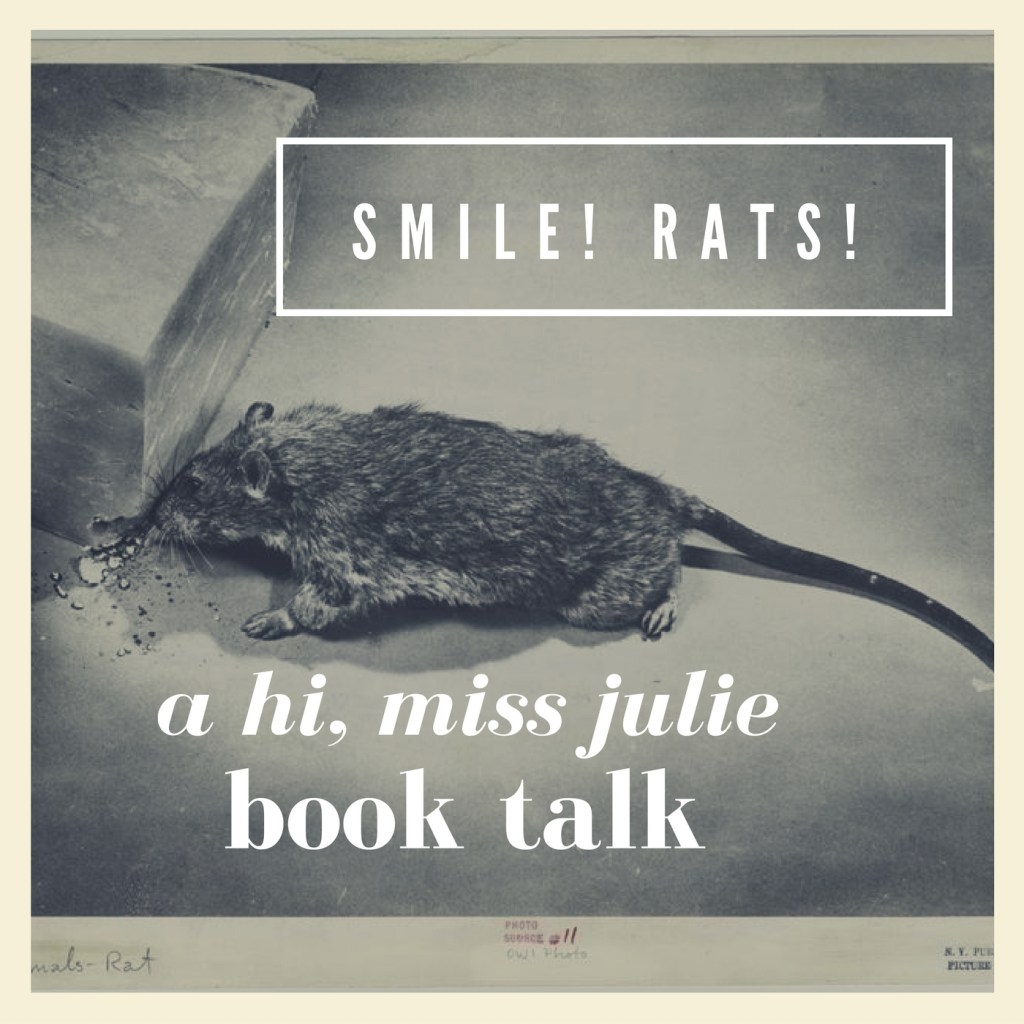
via the new york city public library's flickr page

via the new york city public library’s flickr page

As the school year draws rapidly to a close (seriously, where did it go?) I’ve been reflecting on my first year as a school outreach librarian. I can’t tell you how invigorating it has been to use different skills and get to try new things with a wide variety of audiences. One of my favorite programs this year was all of the booktalks I did for middle schoolers (6th-8th grade) and teachers. In my previous six years as a librarian, I had done very few book talks. It was something I really wanted to do, but it just never happened in previous positions.

I was extremely lucky that I started out this school year being invited to book talk first to two groups of teachers, one elementary and one middle school. After getting to see me and my colleague book talk, teachers had a sense of who I was, how I behaved, and liked me enough to want to have me get up in front of their students. This was a great break for me, and once one class had me and my coworker in, all of the rest of them wanted us, too.

This year I averaged about two book talks a month, usually spending an entire school day (8 a.m.-2 p.m.) talking to multiple classes. Often I was solo, but several times I was lucky enough to be joined by members of our teen staff. While I can do these book talks alone, six hours of booktalking is a long time, and even with a partner I’m exhausted by the end of the day. I vastly prefer booktalking as a team for two major reasons (other than the fact that it helps to save your voice):

1) Variety. With two readers sharing books, the kids will get a wider variety than from one person alone. While I am very careful to select a variety of books, there are certain genres and topics I just can’t muster much enthusiasm for. I can fake it, sure, but why do that when a coworker is just nuts about the books I’m lukewarm about? While I’m pretty good at selling any book, kids can tell the difference between my genuine enthusiasm and the enthusiasm I put on for their sake.

2) Attachment Librarianing. This is something I carried over from my preschool teaching days, and I think it really applies to librarianship. Kids and teens are all unique, and not every personality is going to have a great fit with every kid or teen out there. For example, I quickly bond with shy, nerdy, awkward kids and teens (I try to find the Whovians in every middle school class as fast as I can). Other kids like me just fine, and I can and love to help everyone, but the geeky kids are more likely to seek me out and will get better recommendations from me, just because we’re so simpatico. With more staff available, more kids are likely to find the librarian whose style and personality speaks to them, which equals better service.

For me, booktalks are a lot like storytimes for older kids. While I don’t reveal endings or major plot points when I book talk, I do tell a story to get kids invested and interested. A lot of times I will use the theme of a novel or a hook from a nonfiction title to riff for a while. Just call me the wholesome Richard Pryor of librarianship. For example, when I booktalk Fourmile by Watt Key, I spend a lot of time talking with kids about PTSD, the stigma of mental illness in our culture, how we treat our soldiers, and why so many books for kids feature dead dogs (seriously!). When I talk about Almost Astronauts, I tell them the anecdote about Jerrie Cobb shattering all isolation booth records (NINE HOURS AND FORTY MINUTES Y’ALL), yet never getting the chance to be an astronaut. From there, I talk a bit about how women are seen in our culture and how we are treated.

My style is a little unconventional, I suppose, but it works for me, and it works for many of the kids I booktalk to. And that’s the important thing, I think–is to find your own personal style, your voice. That’s what will make your book talks exciting and get the kids interested in reading the books you’re pushing.

And what books do I push? It depends. If a teacher is working on a genre study, I’ll bring titles in that genre. Often I like to do a mixture of fiction and nonfiction, new books and backlist. I try to have books at a wide variety of reading levels with a variety of appeal factors. Most of all, I strive to bring books that I’ve read completely and have a component that I am super, super excited about. Even if I didn’t personally love the book, if there’s a crazy character or fascinating setting that I can see kids being interested in, I’ll definitely book talk that sucker.

So that’s just a little bit about my new favorite professional responsibility. What about you–do you book talk? What’s your style? Any favorite titles?

Storytime Opera

even cats can sing!

even cats can sing! illustration by Kyle Harter http://www.kyleharterart.com

Singing is one of those things that every human can do, but many avoid doing because they think they’re not good at it or that they have bad voices. There is no such thing as a bad voice. There are voices that people prefer to hear, but breaking things down in to good and bad–especially when you’re working with children–doesn’t do anyone any good.

Now I judge the heck out of singers. When people tell me I should audition for America’s X Factor Yodel Idol, or some other such nonsense, I want to cry. Those people aren’t singers. I don’t know what they’re doing–hollering slightly out of time, maybe, or gyrating while they emit sound waves–but that, to me, is not singing.

And there’s definitely a difference between singing on a stage, for people who might have paid to hear you sing, and singing because it feels good and it makes you happy. Ideally those singers on stage are happy when they sing, but not always.

But anyway. Singing in storytime is amazing. Singing and music can bring people together in a way unlike any other art. We know, anecdotally, that rhythm soothes and teaches—that’s why we sing nursery rhymes, and rub our baby’s back when she’s trying to fall asleep. That’s why dancing is so revitalizing for many–the rhythm does, indeed, get you. That’s why massage–the rhythmic stroking of our body–is so soothing. Science is also looking into whether or not music and rhythm can actually be used as medicine. I know that if I am having a bad day, or am stressed out, banging out some c&w rhythms on my guitar can have a positive effect on my mood.

Even without all that, singing is one of Every Child Ready to Read’s 5 skills. So there’s every reason for librarians to be singing in storytime, and programs beyond storytime as well (seriously, I played a Bob Dylan song for a group of 7th graders once and it was amazing).

“But I can’t sing!” you cry. Yes, you can, I reply. If you can talk, you can sing.

Listen. Kids don’t care. They are the perfect audience to sing to. They don’t notice if you’re pitchy, or off key. They love the sound, the rhythm, the melody, the movement. If you’re smiling and excited as you’re singing, they will love you. You will be a rock star in the eyes of toddlers.

“But you’re a singer!” you say. “It’s easy for you!”

Well, perhaps. I’m accustomed to singing, and I enjoy it. But listen– singing with kids isn’t the same as playing a set of original weepy folk songs at the coffeeshop. Firstly, I put everything in a higher key for the kids, so their piping voices can sing along more easily. I’m singing slightly above my range in every storytime, and most times my voice will inevitably break a la Peter Brady.

And no one cares. The adults will snicker if I reference Peter Brady, but no one is shocked that it happened. In fact, it sets everyone at ease and gets more people singing.

Further, the trick is to sing. Playing CDs is fine, but there’s something special about the human voice; and if you have chatty storytime parents, I find it’s much harder for them to talk through my earnest singing than it is to talk through a booming CD track. (I think Storytime Katie has written  about this but I couldn’t find the post.)

I also play guitar. Which kids like. But you know, playing basic folk guitar is not that hard. If you want to be Eric Clapton, that’s another thing. But if you want to play three chords and sing “The Wheels on The Bus”, well, that’s within everyone’s reach. And even then, kids don’t care. One time a kid completely undid the tuning on my guitar and I wasn’t able to fix it, but I played “Five Little Monkeys Jumping on the Bed” anyway, and not a single kid noticed. They just jumped their little hearts out. Some of the parents grimaced, but, well, that’s the cost of entertaining children–sometimes you annoy the adults.

So sing in storytime! It will only bring you good things, I promise you.

Other singing in storytime stories:

If you’ve written about singing in storytime, please link in the comments and I will add it to the list!

Make It So

madeit


As she so often does,  hit the nail on the head with her post Everything Old is New Again.

I wonder, how many libraries with MAKERSPACES consulted their youth departments before creating this BRAND NEW THING? Because, seriously, been there, done that, have the stained shirt to prove it.

Some of you might argue that maker spaces are more digital, or involve power tools, or whatever. To which I reply, So certain types of making are better than others? Our flannel stories, origami programs, bookmaking and playdough are inferior to flashier, decidedly more masculine forms of making?

Same old story–when women do it, it is easier, lesser, and undervalued. As soon as a dude says it’s cool to print a robot out of plastic, then it’s something.

Which is not to say I don’t like the Maker/DIY movement. Just that…maybe ask for help from people who’ve built their entire careers around it. They might have something to teach  you. And by might, I mean definitely.

speak

I think my “ego” post actually contained within it several separate issues, all of which deserve their own careful looking over. Let’s do that, shall we?

first: speaking and keynotes.

I’ve been to several events where, as one commenter noted, the keynote speaker is someone famous who has just written a (usually awful) children’s book (because any idiot can churn out a book for kids, amirite?) and who blah blahs about how they LOVED libraries when they were kid or love libraries today or something else, then tell us why they just HAD TO TELL THEIR STORY in a MARKETABLE FORM.

Ugh. Gross. Don’t do that. Ever.

I say that both to the famous people in regards to writing children’s books, and to conference organizers who book them. There are so many wonderful authors who are also excellent speakers, why not book one of them?

Or, to be daring, why not book a straight up storyteller? (Ben Haggarty is one of my personal favorites). Instead of forcing your attendees to listen to some smarmy pap about “Go libraries” or “These are tough times, huh?” let them listen to a goddamn plain old good STORY. Of course, the theme will resonate with listeners, because a good storyteller will choose an apt tale, but the listeners will have to work for it. And they will appreciate it all the more that way.

Some of you might be thinking, why should I listen to a story? Because libraries are all about stories. Why do people read books? To read stories. Why do people read e-books? To carry a lot of stories with them in a portable form. Why do people need to create a resume? To tell the story of their work life. Why do people check out DVDs? To watch stories. Why do people create videos? To tell their story in a visual format. Why do people (sometimes, rarely, not often enough) access articles from our databases? To write a paper, or make a presentation, that tells a story. ET CETERA AND SO FORTH.

So libraries are about gaining access to stories, and, more recently, they are an avenue for creating and storing new ones. And shouldn’t we celebrate this fact with every keynote and every conference? This is not to say, of course, that non storytellers can’t tell a good story–it’s just a bit trickier, and that’s what the market has been glutted with in the past few years. I’m just saying…try something different, and see how it goes.

While I myself am well aware that I am not keynote level (I’m slogging along, paying my dues, very happily), off the top of my head I can think of five or six excellent women who work with youth who are at a point in their careers where I think they’d be damn fine keynote speakers. They’ve taught courses at the master’s level, published, and are all around engaging and inspiring. But librarians like that don’t seek the high profile engagements, because they are too busy, you know, being great librarians.

I don’t know how to get this to change. Does it need to come from a management level? Do public library directors and school principals need to push their staff more to engage with the profession on a larger stage? Perhaps. What do you think?

ego, thy name is librarianship

cc license photo by flickr use r zoonabar

cc license photo by flickr use r zoonabar

Anyone who knows me will tell you that I have a bit of an attention problem. No, not attention deficit– I have a need to be, if not the center of attention, at least left of center. Even though I am an introvert at heart who needs significant alone time to recharge and prepare, I am actually happiest when I am in front of a crowd. I meet this need for attention in many ways–by working in an area of librarianship that demands that I present storytimes and other programs, by being a performing songwriter on my personal time, by writing this blog. Often these endeavors are satisfying enough in themselves, but sometimes–during dark, lonely afternoons as I type up program plans, or ponder what to write about next on the blog–I crave even more attention, but I don’t know how to get it.

Doesn’t this all sound awfully conceited? I know. It does. But I’m nothing if not honest, so yes, I’ll admit to thinking I am awesome. I think I do excellent work, and have unique contributions to make, even though I don’t have a slogan or a hashtag or a large, slavish following. Sometimes I wonder if I were a man, writing about ebooks, if I’d get more attention. But since I am a lady writing mostly about playdough and early literacy, decidedly unsexy topics in librarianship (and when did “sexy” begin to equal “intriguing” or “worthwhile” or “interesting”?) I have a decidedly smaller circle of admirers and colleagues, most of whom are my fellow unsung heroes of the library world. As a children’s librarian, if you write more about how you use books with children than you do about the books and authors themselves, you don’t get as much notice.

Perhaps it is just my sensitive ego at work, but I feel like the librarian bloggers who work with children and teens and who write primarily about programs don’t get the recognition they deserve. Storytime blogs such as So Tomorrow, Awesome Storytime, Mel’s Desk, Playing by the Book, Tiny Tips for Library Fun, Bryce Don’t Play, and Storytiming provide real, concrete advice for creating worthwhile programming, which should be the bread and butter of libraries. If all of us wrote more book reviews and less about the programs we created using those books, or why we create the programs we do, perhaps we’d get more notice. If we blogged about hot button topics like e-books for babies or stripping our children’s departments down to look like futuristic lunchrooms filled with ipads, perhaps we’d get a ton of traffic. But we don’t. We write about our quiet successes and failures, about the simple craft of creating a flannel story, about what rhymes will fit with certain themes, and when we do review books, it’s always with an eye to How will I use this with a group of children? When we get dressed for work, it’s always with a thought about how easily we’ll be able to get up and down from the floor during storytime, and whether or not sweat will show if we’re doing a lot of jumping songs that day.

In a profession that’s supposedly dominated by women, I find it sad that the librarians who get the most attention are mostly men (and, admittedly, some women), men who very rarely write about honest, simple, day to day issues in librarianship (Swiss Army Librarian being a rare exception, with his marvelous ref questions of the week). These men spin elaborate fantasies about librarians being information rockstars who dress to impress (either flashily or with an eye to ironic hipsterism), dismiss librarians who still use books to connect with patrons as hopelessly backwards, and come up with gimmick after gimmick to get libraries “noticed” without ever once writing about a concrete, applicable thing that they have actually done. Show me how libraries and librarians are amazing, don’t just tell me and expect me to be convinced.

I’m on very precarious ground as I write this, because honestly, my main motivation is that I am sad that I am not more recognized. [I really regret this sentence right now! While I, personally, do want to be recognized, more than that I want my tribe--kid and teen librarians who work so damn hard with little to no recognition in the wider library world--to be noticed and appreciated. Which they might be. I'll admit to not being able to read everything ever printed about libraries. JJ 01/16] I want to be noticed. I want people to listen to what I have to say. I want to be offered speaking engagements, to have a larger platform to  discuss my ideas of how to better librarianship, to be valued. I want to win awards. I crave approval and recognition, and yet, to paraphrase Lillian Hellman, I cannot and will not cut my librarianship to fit this year’s fashion. I don’t particularly care about e-books, only that I wish we could give our patrons what they want. I don’t particularly want to shove ipads into the faces of babies and toddlers because I still believe screen time is ultimately damaging. I don’t really care to have the perception of librarians go from shushing bun heads to strutting pimps. (I think Frank Zappa* is a better rock star librarian model than any rapper, but that’s just me. Like Frank, I believe in free speech, showmanship, and being a decent human being. Like Frank, I think you can push the envelope of expression without being hateful to women.) I like books, and I believe librarianship is about books, if you stop and think about how books equal stories, and it doesn’t matter what goddamn container they come in, be it paper, digital, audio, or a film or a video game. Stories are what people crave, and stories (like the storycorp partnership with libraries, or the not so new resurgence of reading aloud to adults–and adult librarians, if you need help on reading aloud, you know who to ask) are what libraries have and always will do best.

So next time you need a keynote speaker, perhaps consider one of us librarians who spend most of our time on the floor–often literally. Our subject matter might not be “sexy”, but we know how to tell a damn good story.

*”If you want to get laid, go to college. If you want an education, go to the library.” – Frank Zappa

let’s stop worrying and love the common core

You’ll live to be read another day, sweet Catcher in the Rye. Beautiful illustration by naomi yamada.

Dear sweet baby Jane.

So if you want a rage stroke, read the articles I’ve listed below. If you want to just read an accurate description of how the fiction/nonfiction actually breaks down in the Common Core, just read this one.

I think the way everyone (yes, LITERALLY* EVERYONE EVER) was misquoting the 70% figure and assiduously babycrying about Recommended Levels of Insulation being an exemplary text (which it IS, for INFORMATIONAL TEXTS, not LITERATURE) really shows us that our ability to read different types of text SUCKS.

Listen. I think the common core probably has flaws, but I don’t care, because it has at least one major strength: knocking lexile off its perch as the definitive way we give kids books to read.

See, a major component of CC is text complexity. This concept forces us (us referring to teachers, parents, and librarians, mostly) to consider a whole text when we’re deciding when to read it and who to read it with. (I love this mostly because it reminds me a lot of the whole child approach to teaching). Lexile is only one piece of the puzzle. It must be used in conjunction with theme, levels of meaning, structure, prior knowledge demands, etc, to decide where a piece of writing would best be used. (I’d never be able to explain it better than Jackie Owens did in this presentation, so if you want to see how to evaluate a text, check that out, bookmark it, print it out and laminate it–it’s an excellent tool to use.)

The idea is that we want to empower kids to be stronger, more well-rounded readers. We want them to be exposed to a wealth and breadth of reading materials so that they can discover their talents and passions. You know that some kid is going to geek out intensely on that insulation text (well maybe not, but don’t we all know kids who pore over game manuals who could easily and happily make the leap to, say, car repair texts? or mortgage applications?), and who are we to deny that kid that opportunity?

Being able to adjust one’s reading style to the text at hand is an important skill, and one that we’re sorely lacking. You don’t read a verse novel the same way you read your tax form, and if we don’t teach kids that, we’re setting them up for failure. Maybe if more kids knew that it was okay to skim the boring parts of a novel (hello, flensing in Moby Dick and architecture in The Hunchback of Notre Dame) they’d be more able to stick with a difficult novel and get out of it what they could. Further, if we read more informational and technical texts, maybe we’d have been better able to avoid some of the effects of the financial crisis because it wouldn’t have been so damn difficult to read and understand loan documents and mortgage applications.

So teachers, don’t worry, you can keep teaching The Catcher in Rye (shudder) until they pry Holden Caulfield’s literary corpse out of your cold dead hands. But you can also spend a little time reading biographies of some of the famous people mentioned in the text (such as Gary Grant, or the Lunts, perhaps, although I can see many a middle schooler having a field day with that name), or looking at articles of the period from the Saturday Evening Post. CC isn’t about taking anything away, it’s about adding supporting materials to deepen and enrich the experience of reading.

It’s also a great opportunity to insist that literacy isn’t solely the responsibility of the LA teachers and librarians any more. Read a novel in math class (Alice in Wonderland and The Phantom Tollbooth both lend themselves wonderfully to big, beautiful, crazy making math discussions), or read Silent Spring in biology class. I read Silent Spring in biology class when I was in high school, and it’s pretty much the only damn thing I really remember, frankly. For kids who aren’t technically minded, having stories to hang these concepts on is a wonderful scaffolding and support technique. And for kids who love to crunch numbers and muck about with beakers, being exposed to the lyricism of Rachel Carson’s prose or the sheer goofiness of Milo’s adventures will remind them of the human element inherent in every discipline, no matter how far removed it may seem.

SO FRET NOT FRIENDS. The world of literature for children has expanded, not contracted; there is a bounty out there, with something for everyone. Rejoice.

AND DING DONG LEXILE’S DEAD. Or, at least, not so very powerful.

Now I want a ding dong. Or actually, a zinger.

*Chris Trager style

How To Do it Right

Two Common Core Blunders To Avoid–and How to Do It

The Role of Fiction in the High School English Language Arts Classroom

How to measure text complexity

Common Core and Nonfiction, Again

Rage Stroke Articles

Common Core Nonfiction Reading Standards Mark The End Of Literature, English Teachers Say

English Class: Hold the Literature?

Catcher in the Rye dropped from US school curriculum


welcome, Illinois Library Association/Wee Be Jammin’ friends!

Wow, this year’s ILA conference knocked it out of the park. I’ll be exploring some of the things I learned in more detail later on, but I did want to say hello to anyone who finds my blog post-conference. In the mean time, the ILA Youth Forum blog has a pretty nice recap of all the programs that were of interest to youth librarians if you want to check that out.

Also! If you’re interested in starting music programs at your library, I’d be happy to come out and visit you! I can present a program for your patrons, a workshop for your staff, or both! See the music page for more details and contact information. And thanks for reading!

September, I remember

September, how did you get here so fast? Oh, yeah, summer reading (Ingrid breaks it down for you, animated gifs and all). And, oh, yeah, I have a new job (which makes another Ingrid link relevant).

I’m going from being a storytime all the time librarian to a school services coordinator librarian. It’s been hard to say goodbye to a community I’ve served for four years, but it’s an exciting opportunity, and I’m really looking forward to all the new duties, challenges and experiences ahead of me.

Since the playdough post was so popular, I wanted to pass on these links with more ideas: Garden Playdough from Bakers & Astronauts and Playdough Power from NAEYC

How was your summer? And what are you looking forward to this fall?

Play @ your library: Playdough Party

Want to have one of the most successful library programs ever? Make playdough.

We did this program with 3-8 year olds, but I can see this working with even older kids, up through middle school–it’s all how you market it. It’s a great program to do at the library because, sadly, I think a lot of kids don’t get to engage in messy play at home because parents don’t want to face the clean-up.

Before we made the playdough we retold the story of Goldilocks and the Three Bears with finger puppets because the story uses a lot of descriptive vocabulary–hot, cold, slow, fast, hard, soft—and I thought it was a fun way to launch into the program.

We made the following three recipes, making sure to talk about different textures, scents, temperatures, and other properties. Then we let the kids spend a lot of time playing and building, and allowed them to take home as much playdough as they wanted. We also printed out the recipes for parents to take home if they chose.

(I found the recipes at prekinders.com, which is my new favorite website. There are many more recipes up there, so choose your favorite.)

Kool-Aid Play Dough

2 cups flour
1 cup salt
1 package of Kool-Aid
1 cup hot water
Combine ingredients and mix.

Coffee Play Dough

2 cups used coffee grounds
1 and 1/2 cups cornmeal
1/2 cup salt
water
flour
Mix all ingredients until pliable. Add water, flour as needed to achieve a working consistency.

Oatmeal Play Dough

1 part flour
1 part water
2 parts oatmeal
Mix well and knead

Read more: http://prekinders.com/play-dough-recipes/#ixzz20Ka4QwZv

Do I contradict myself?

In my dreams of big tent librarianship, I envision a field where librarians of all types are exchanging ideas on common themes and issues facing their libraries. I see an active interest in seeking out sessions at conferences and workshops that glimpse the lives of other professional specialties. I imagine a profession where organizations, divisions, roundtables, and committees still exist but the obstacles and impediments to communication between their members does not.

Backtalk: We Need Big Tent Librarianship, by Andy Woodworth

Apparently this communication and exchange of ideas looks like this: